
Leadership Isn’t a Check-the-Box Activity
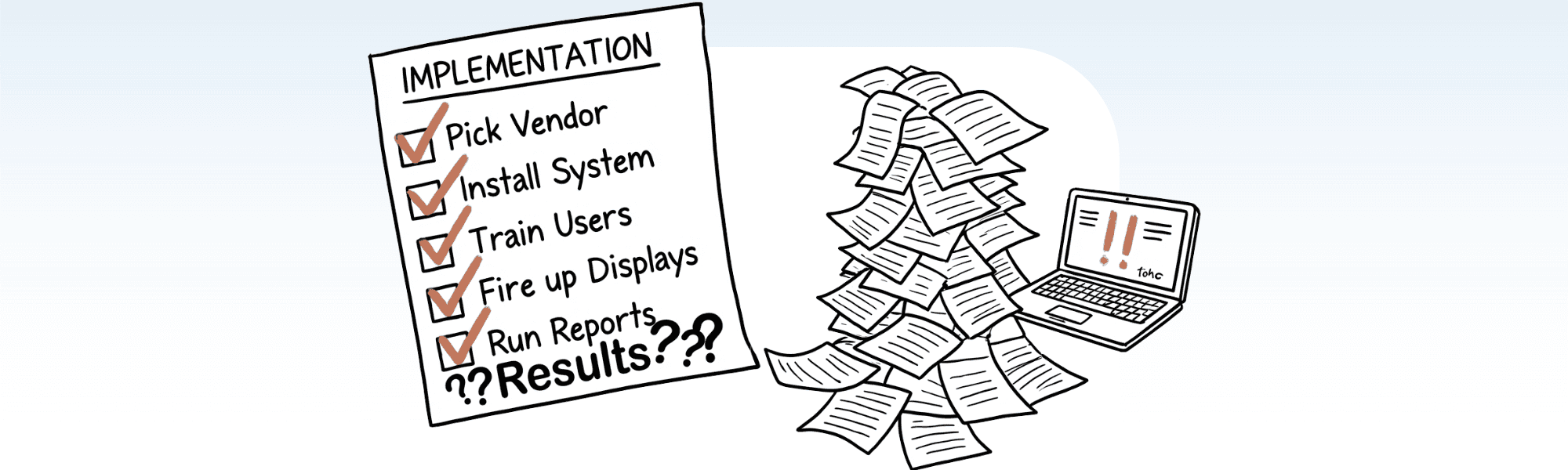
Manufacturing organizations are exceptionally good at checking boxes, especially when it comes to shop-floor data collection. The pattern is familiar:
Pick the vendor.
Check!
Install the system.
Check!
Train the users.
Check!
Fire up the displays.
Check!
Run the reports.
Check!
Each step gets completed, each milestone gets checked off, and then everyone waits for performance gains that somehow never materialize.
Somewhere along the way, implementing shop-floor data became synonymous with improving performance — as if visibility alone creates productivity, or collecting data automatically translates into better leadership. It doesn’t.
Data systems can provide clarity, but they cannot create alignment, urgency, or accountability on their own. Those are leadership functions, and when they’re missing, even the most sophisticated platform becomes little more than an expensive observer.
Data Doesn’t Drive Results — Leadership Does
In plants that consistently hit performance targets, the differentiator is rarely better dashboards or more KPIs. It’s leaders who know how to use the data to focus attention, align teams, and convert recurring issues into shared priorities.
That capability is becoming rarer. Many organizations have invested heavily in shop-floor data systems but never developed the leadership skills needed to extract real value from them. Supervisors remain buried in daily firefighting, the same issues reappear shift after shift, and although problems surface faster, they still don’t get solved. The gap between expectations and execution stays exactly where it was.
Sometimes data use even backfires. Instead of creating clarity, it fuels defensiveness. Instead of supporting problem-solving, it becomes a tool for explaining variances after the fact. Having visibility through data, often results in a reasonable expectation that “somebody” will do “something” to address the issues impacting performance. When that does not happen, trust erodes quickly, and once trust is damaged, more data rarely fixes it.
This isn’t a technology failure. It’s a leadership capability gap.
Visibility Creates Opportunity — Leadership Creates Value
Most shop-floor systems don’t fail because the technology is flawed. They fall short because organizations mistake visibility for capability. Data can highlight opportunities, but leaders have to turn those insights into action.
Using data well means asking better questions rather than demanding better numbers. It means helping people understand the story behind the metrics so they see why performance matters, creating a shared source of truth instead of competing narratives, and focusing attention on the few drivers that genuinely improve outcomes. Those are practical leadership skills, not technical ones, and they don’t emerge automatically when a system goes live.
If productivity improvement is the goal, the question can’t simply be, “Do we have the data?” It has to be, “How is this data changing how we lead?” Installing systems is relatively straightforward. Training users is necessary. Changing how leaders think, decide, and act is harder — but that’s where the real gains come from.
Until organizations close that gap, “checking the box” will remain one of the most expensive habits in manufacturing. That leadership capability gap sits squarely at the heart of They Just Don’t Get It.